wild walls
8.27.2022 -10.21.2022
Curator: Nara Huang Artist: Roy XR Chen Organizer: HOW Art Museum
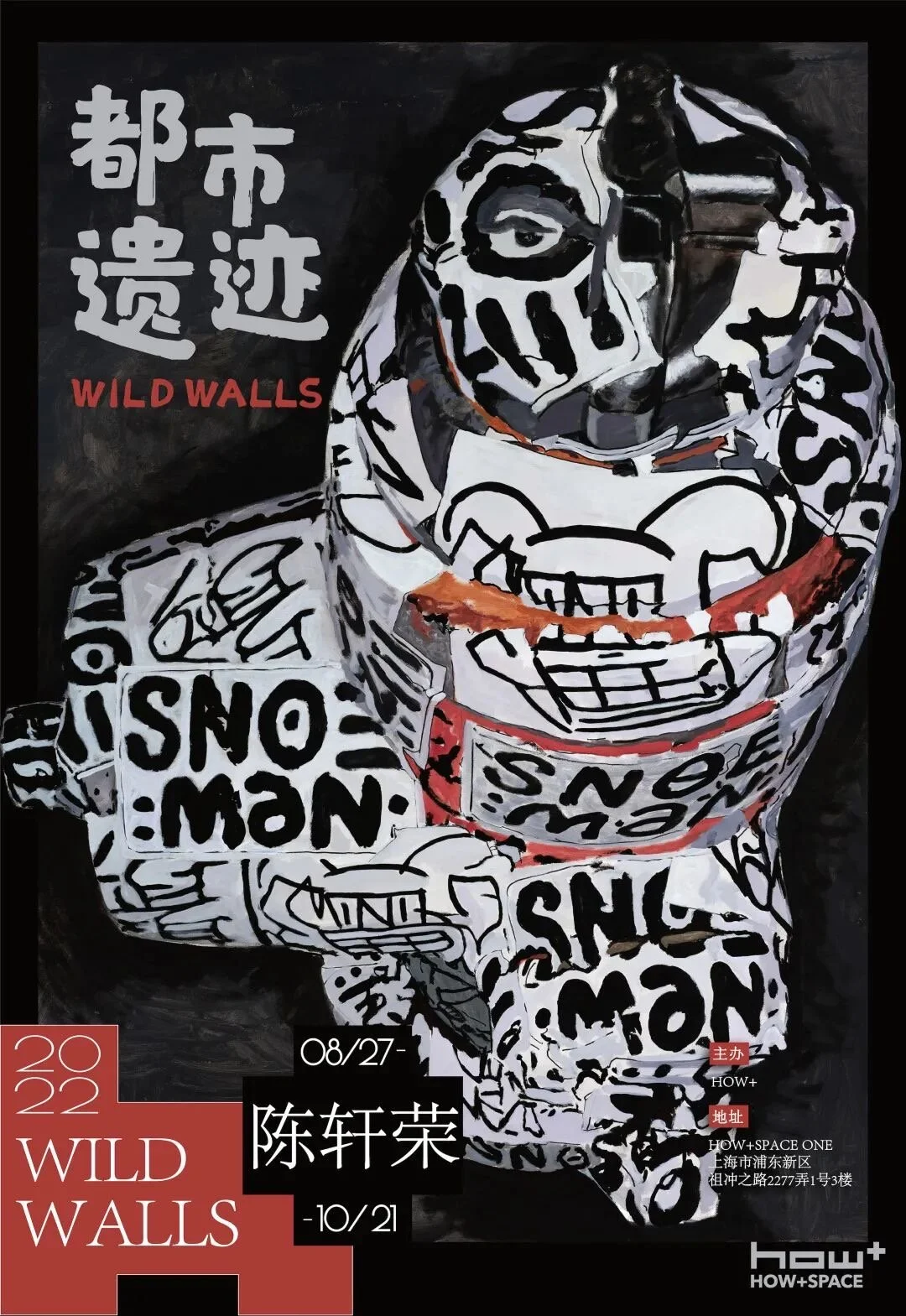
WILD WALLS
8.27.2022 -10.21.2022
Curator: Nara Huang Artist: Roy XR Chen Organizer: HOW Art Museum
Poster designed by Xulei Li
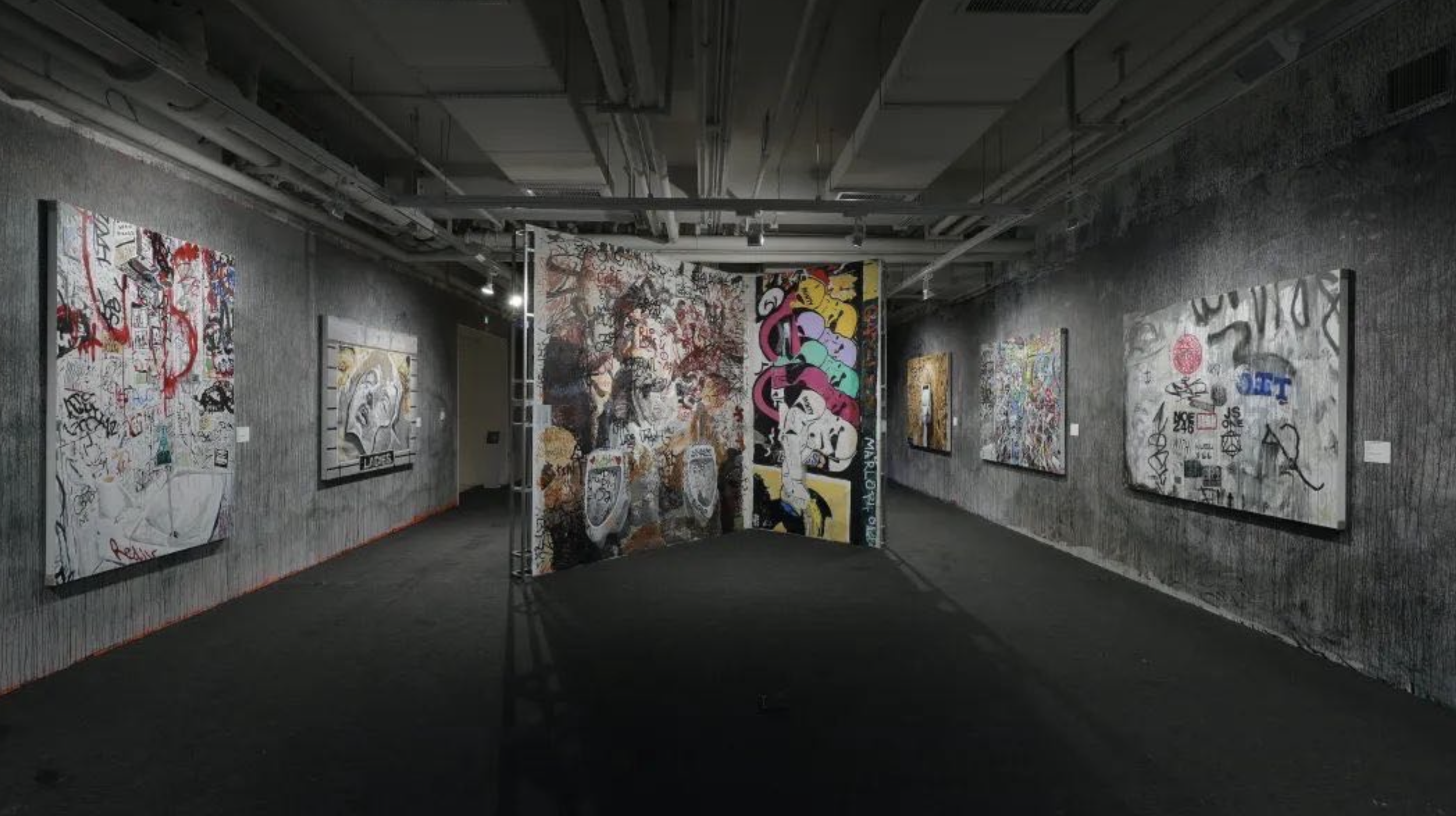
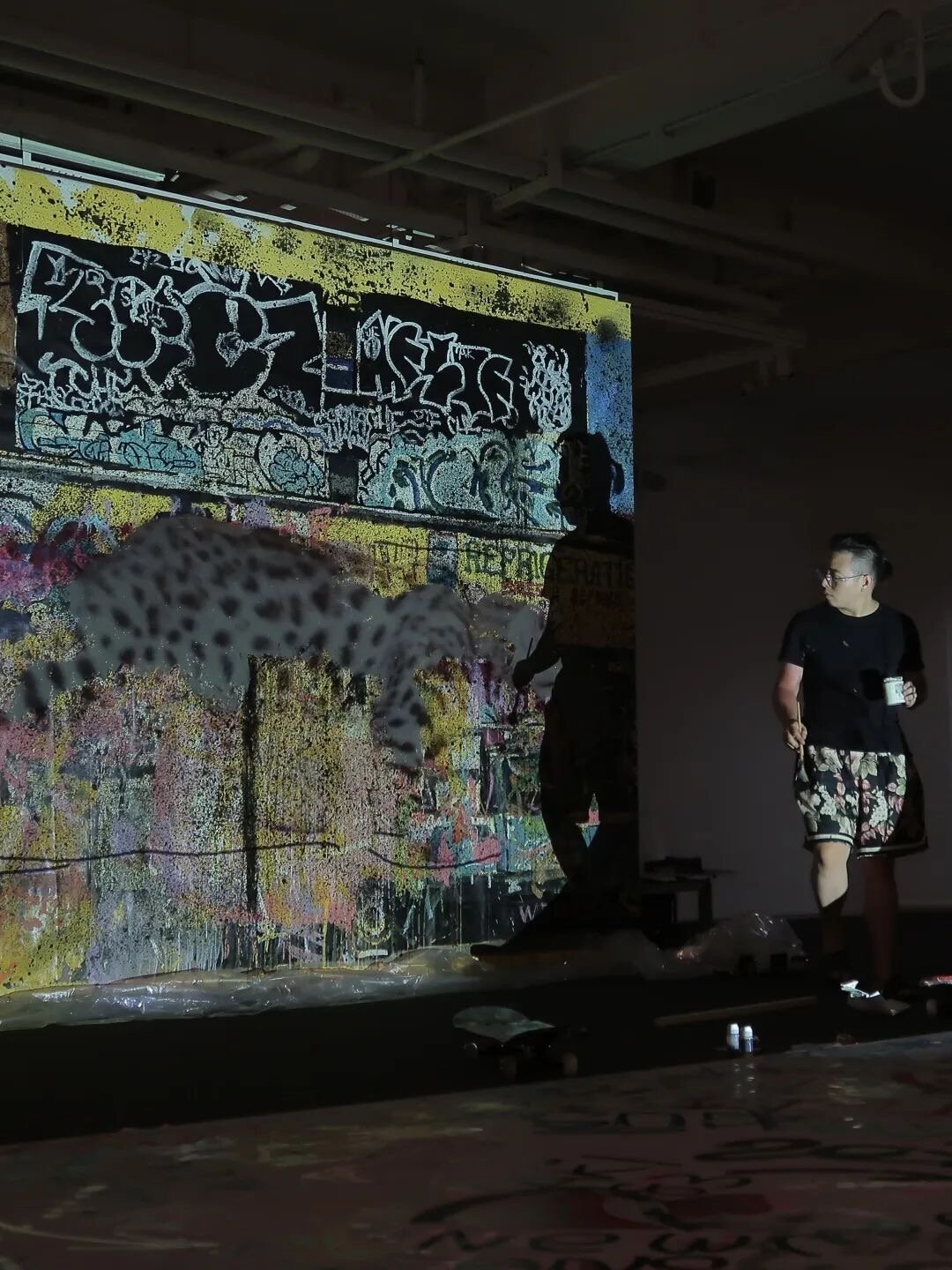
The works on view at "Wild Walls", Roy XR Chen’s solo exhibition at HOW+ Space One, are selected from his "G Series". The series intends to cast more light on what behind the graffiti through the passing of time rather than merely the content of the graffiti itself. When he creates the works, Chen’s role constantly swifts between a graffiti artist, an observer and a recorder. His works delicately depict the rich layers of graffiti: the top layer of fresh paint, the base layer showing decadent walls, and the sediments left over by the washing of time in the middle layer. The whole series conveys the message that human creation, be it graffiti or industrial productions, can never withstand the power of nature and time for good. In Roy XR Chen’s paintings, we see modern cities eroded by nature, and buildings slowly deteriorating as if they had life in them. Old graffiti on the walls are covered and replaced by new ones over and over, leaving human traces in abandoned cities all the more distinct.
Roy XR Chen is deeply intrigued by the interplay between the sense of incompletion and dilapidation of ancient murals caused by the force of nature and traces of human intervention. His works depict scenes of post-human civilization. There are streets, walls and toilets, all with human traces, but not a single human figure. In these scenes, graffiti is the only non-industrial mark left by human beings. Viewers become both the observers of and pedestrians on these streets. Roy XR Chen sees graffiti as a modern form of mural painting that has emerged since the last century. With the development of industry and urban construction, graffiti start to be seen on surfaces other than walls, for instance, toilets, vehicles, garbage cans and skateparks. In ancient times, to make recordings was a main purpose of mural. Nowadays quite likewise, graffiti has also turned out to become a medium to witness and record the ongoing urban and community cultures. The graffiti and surfaces where they are presented collectively define the "Wild Walls".
In the eyes of some observers, graffiti continues the purpose of murals as a public art form. Great graffiti works as not only decoration but also a voice for people from certain communities. However, the question whether this kind of works is an innovative art form or a public nuisance has always remained controversial. In the discussion of the use of public space, graffiti artists are often regarded as intruders of urban public space. But at the same time, people give consent to displaying something more offensive in public places: advertisements. Ads always tells us that we are not good enough, not pretty enough, not wealthy enough. Although graffiti can be aesthetically immature in some aspects, at its best, it can be the opening of a communal space: a commentary, a conversation, a concept captured in an image on a wall. Real street art holds up a mirror to the world so that we can see the absurdity of it. It shows us who we really are, both good and bad, as a community. Street art has an amazing ability to do this because it exists in our real and everyday world, not vacuum-sealed and shuffled away in a privileged private space. Its very public nature makes street art unique and powerful.
Touring around the "Wild Walls", viewers would easily notice that there is a large number of works under the theme of toilets. What makes toilet graffiti special, and worthy of its own entire category, is the uniqueness of the space in which people are painting or writing. There’s a tension to doing private activities in a public space, with only the flimsiest of boundaries hiding and displaying some of our culture’s biggest taboos. Toilet graffiti also offers an interesting contrast to the way people typically behave in the bathroom. The unspoken rules of keeping to oneself, not making eye contact, and avoiding talking to strangers, all contribute to a sometimes-tense environment with the goal of shifting focus away from what’s actually happening behind stall doors. But the graffiti on the stall doors does not ignore it one bit. It crudely acknowledges and pokes fun at what we all go to the bathroom to do, and flouts the politeness surrounding it as well. These "aggressive" graffiti enter spaces that should not have been entered, and now these spaces are moved into the art museum. The exhibition "Wild Walls" have also become a carrier of graffiti. Together with the paintings in the exhibition, they record the time and space of these graffiti, or the dynamic superposition of several different spaces and times, generating an moment of uncertainty.
Curator: Nara Huang
![Portfolio-XIN YUE (NARA) HUANG[88]_Page_06.jpg](https://images.squarespace-cdn.com/content/v1/695e00ef6efe8a354ee8be79/e34aa581-9e27-42bb-a22b-f4ca7adfa9aa/Portfolio-XIN+YUE+%28NARA%29+HUANG%5B88%5D_Page_06.jpg)
![Portfolio-XIN YUE (NARA) HUANG[88]_Page_07.jpg](https://images.squarespace-cdn.com/content/v1/695e00ef6efe8a354ee8be79/dfb39706-2b6a-4690-bbc7-f5fc2199d41e/Portfolio-XIN+YUE+%28NARA%29+HUANG%5B88%5D_Page_07.jpg)
![Portfolio-XIN YUE (NARA) HUANG[88]_Page_08.jpg](https://images.squarespace-cdn.com/content/v1/695e00ef6efe8a354ee8be79/4ca8b0b5-1205-4c09-81df-41f18cc83061/Portfolio-XIN+YUE+%28NARA%29+HUANG%5B88%5D_Page_08.jpg)
陈轩荣全新个展“都市遗迹”中的作品均出自“G系列”,此系列作品强调的并非涂鸦本身,而是涂鸦及其承 载物经历时间洗礼后的产物。艺术家在创作时身份不断地在涂鸦者、观察者与记录者之间切换。其绘画细 腻地描绘了涂鸦丰富的层次:最上层鲜活的涂料、墙壁颓败的底色,及之间若隐若现被时光洗刷过的沉淀 物。系列主题传递着不论是涂鸦还是工业的人为创造终抵不过自然和时间的力量。现代都市被自然蚕食, 建筑仿佛有生命般慢慢败坏,墙壁上的新旧涂鸦覆盖更替,被遗弃的都市中人类的痕迹历历在目。
古老壁画由自然之力造成的残缺凋零感和人为的痕迹之间的关系深深吸引着陈轩荣。其作品中描绘了似后 人类文明的景象,有着人类痕迹的街道、墙面和卫生间,却没有人的身影。这些场景中,涂鸦是仅有的人 类留下的非工业印记。而置身展览的观众成为了这座“都市遗迹”中的人,也是置身遗迹外的观察者。在艺 术家眼中,涂鸦是从上世纪开始延续至今的一种壁画形式。随着工业发展和城市建设,涂鸦的载体也更加 多样,如厕所、⻋辆、垃圾桶、滑板场等等。古时壁画在于记录,而涂鸦在不知不觉中也成为了记载和⻅ 证都市及社区文化的符号,涂鸦与其承载物共同形成了“都市遗迹”。
在一些观察者眼中,涂鸦延续了壁画作为一种公共艺术形式的呈现。伟大的涂鸦作品可以美化一个街区, 表达特定社区的诉求。然而这类作品是创新艺术形式还是公害的问题一直存在争议。在公共空间使用的讨 论中,涂鸦者常常被视为试图侵略城市公共空间的人。与此同时人们却默许在公共场所展示更具攻击性的 东⻄:广告。它时刻告诉我们还不够好,不够漂亮,不够富有。虽然许多涂鸦在美学上可能不够成熟,但 它可以作为一个在公共平台发声的媒介:一句呼喊、一次对话、一个从图像中捕捉出的概念。真正的街头 艺术可以展示一个社区的真实身份,无论是好是坏,因为它存在于日常生活的公共空间中,而非真空密封 在一个特定的私人空间。“公共性”使街头艺术独特且强大。
除街景主题外“都市遗迹”中还呈现了大量厕所主题的作品。公共厕所空间的独特性使其在街头艺术中可以 作为一个单独的分类。这种在公共场所进行私人活动的紧张感和微妙的界限感能同时隐藏并展示都市文化 中难以启⻮的部分。 厕所涂鸦与人们在厕所里的行为方式形成着有趣的对比。 不进行眼神交流和避免与 陌生人交谈的潜规则,都有助于营造一个有时紧张的环境,目的是将注意力从隔间⻔后实际发生的事情上 转移开。 但厕所中的涂鸦却丝毫不在意人们的情绪,这些涂鸦——通常是人们从周围环境中汲取灵感的创 作,粗暴地承认并取笑我们都去洗手间做什么。这些富有“侵略性”的涂鸦进入了本不该进入的空间,在 “都市遗迹”中又将这些空间搬进了美术馆。“都市遗迹”也成为了涂鸦的承载物,与展览中的绘画作品一起 记录了这些涂鸦存在的时空,或是不同时空的交叠产生的动态定格。
Nara Huang